

Hey, I’m Aden Date
I help arts organisations tell their story so they get the funding they deserve
Strategic evaluation services that build trust with funders, clarify strategy, and tell a compelling story about your work.
Tell your impact story
You’re leading a fabulous arts organisation, and the value of the work you do is clear when you speak with the audiences you delight and the artists you support.
However, the value of the work you do somehow vanishes when you’re asked to put it into a PDF. The transformative impact you achieve is suddenly reduced to pastel bar charts, “so what” demographic statistics, and quotes without context.
As a result, you might also find yourself (or Claude) telling a slightly different story for each funder or audience, and none quite line up with the stories that you share internally — the excited, wild stories of transformation that happen every day.
The end result is that evaluation becomes fragmented and just another obligation. There are spreadsheets everywhere, nobody has the full picture, and the grant churn continues.
There’s gotta be a better way, right?
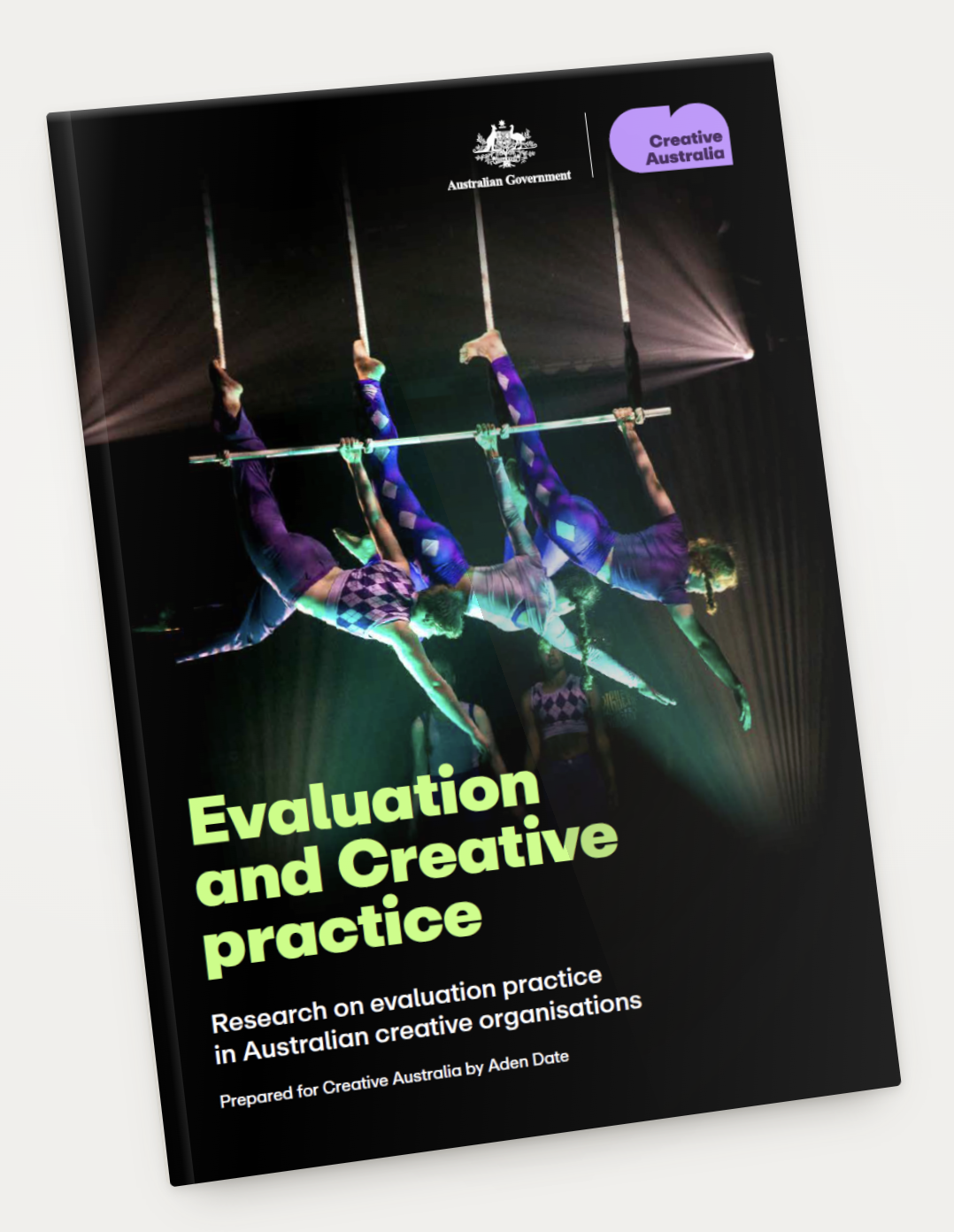
report: Evaluation and creative practice
Learn how organisations like yours use evaluation to learn faster, advocate better and make an impact.
Commissioned by Creative Australia, written by me, and written for you.
Take control of the narrative
evaluation builds trust, clarifies strategy, and lets you lead proactively.
And it doesn’t need to cost the Earth.
Evaluation doesn’t need an eighteen-page data framework, an lawyer-approved MoU with a sandstone University, or fancy software that overclaims and underdelivers. It just requires a clear description of what you do, why you do it, and some evidence as to whether you’re on track or not.
Evaluation is where strategy, learning, and advocacy come together. Arts organisations that invest in evaluation have a sharper focus, make a bigger difference for audiences and artists, and can speak proactively to funders in a language they understand.
Good evaluation saves time, improves learning, and brings in funding.
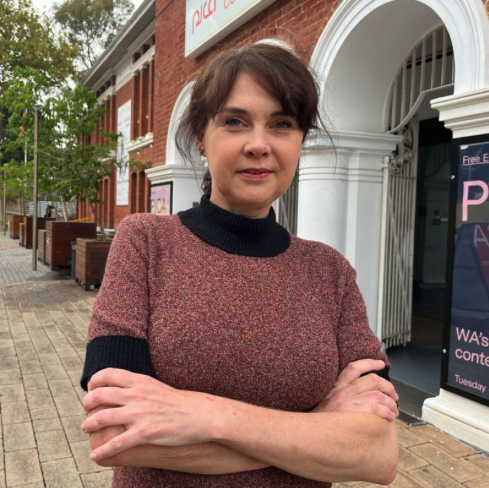
“Aden is highly professional, inquisitive and thorough, and his collaborative approach makes him very easy to work with. He has developed a clear evaluation framework that will guide the strategic development of our boorda yeyi program and we greatly value the trust, expertise and thoughtful process he brings to this project..”
Alana Culverhouse, CEO, Perth Institute of Contemporary Arts
Who I help
You’ve got a project and it needs to be evaluated
Project-based funding often carries an evaluation requirement. I can help you write a report that tells the impact story your funder needs to hear. Alternatively, we can use the project as a chance to build evaluation capacity internally so you’re more capable and confident in the future.
You want to level up your strategy
Five-year strategic plans are dead in a sector that changes as quickly as ours. Good evaluation turns your strategy into something actionable and adaptive that directly supports your advocacy goals (and gives your board something positive to talk about).
your funders are asking: “so what?”
Evaluation reports that look like a spaceship dashboard — all numbers, bar charts, and statistics — simply don’t cut it anymore. Funders want to hear the stories behind your work and to know what difference their investment made. They’re invested in this shift. Heck, they might even pay for you to do this work.

A story-first approach
impact is a story, not a statistic.
Stories are how we understand the impact of our work. We’re shaped by the conversations we overhear, the debriefs we have with our artists, and the earnest emails we get from our biggest fans. This is what we share in meetings, and it’s where we get juicy quotes for our annual reports.
My approach centres on building a simple system around stories so that the data you are already collecting informs your strategy, learning and advocacy.
This is rigorous, real work and it’s what progressive funders want. “Stories” are only fluffy if we collect them without clear intention.
Stats without stories tell us nothing.
Stories with stats tell us what matters.
A process that puts you in charge
→ why
The best evaluations bridge strategy, learning, and advocacy. However, it’s important to know what our near-term goals are: A funding application, a report, or a new strategic plan. This also includes knowing our funders needs and taking their concerns into consideration (without being dictated by them!).
→ whaT
Most evaluation consultants will begin with a Theory of Change — a massive framework that tells you what work you need to be doing. Instead, I help you start where you are with the stories and stats are you already collecting. Avoid duplication and build evaluation around how you already work and think.
→ how
A Theory of Change is a living strategy that communicates how the work you do makes a difference. It’s an internal and external resource for strategy, learning, and advocacy. It doesn’t need to be long — we can build one in three months, three hours, or three minutes depending on your organisation’s capacity.
→ who
Depending on the project, we’ll decide what is conducted in-house by you (with support) and what is conducted by me or another external consultant. My goal is to support you to bring as much in-house as possible so your evaluation is affordable and futureproof. I don’t want dependent clients.

“Aden led us through a complete overhaul of our social impact assessment and evaluation processes. He understood our need to be self sufficient in many aspects of evaluation and trained our team in undertaking these processes themselves. Thanks to Aden CAN is now able to communicate our impact in a way we have not been able to before. .”
Miranda De Baughn, General Manager, Community Arts Network
Ways we can work together

evaluation
One-off program evaluation
Banish boring bar charts. An end-to-end solution to a grant or acquittal that requires a program evaluation. Capacity building is embedded and data will be quantitative and qualitative.
From $10,000+GST
strategy
Impact strategy
A strategy that moves. Combine learning, accountability and advocacy with a strategy that moves you from confused to compelling, aligning stakeholders and staff.
From $10,000+GST