
Changing how we change culture in healthcare
7-10 minute read

The West Australian South Metropolitan Health Service (SMHS) delivers care to more than 648,000 people across the southern half of Perth, through a network of hospitals that includes Fiona Stanley, Fremantle, Rockingham General and Peel Health Campus. With a workforce of around 11,000 under enormous strain, culture change requires a bit of savviness.
Paulette Harraway and Kathryn (Kate) Langdale share an interest in the question: “How do we care for those who care?” The quality-of-care patients receive is a direct result of the how our healthcare workers are going. Unfortunately, it’s bloody hard to be a healthcare worker right
At SMHS, the safety team are seeing a lot of SAC1 (Severity Assessment Code Category 1) incidents. Overt and covert bullying is a major issue. Patient concerns aren’t always being escalated. The root problem, however, is that people weren’t speaking up about these issues. We can’t change norms we’re unwilling to challenge
Paulette, Kate and the OD team had tried a few approaches. Nothing had worked. They were ready to get a bit woo and do things differently.
Paulette and Kate know that you can’t change culture with a poster or a campaign. Culture change has to be strategic, deep, and work from a place of strength. Their approach was to identify and work with a small, focused cohort of Ambassadors. They were the culture champions of the SMHS — those willing to do the difficult work of culture change in addition to their regular jobs.
(Honestly, please remember this next time you’re in a hospital!)
Their Human Factors program was centred around facilitating conversations about human interactions. It was contextualised for SMHS. It had a lot of well-designed, carefully thought-out online content and in-person workshops to consolidate that knowledge. It had a big impact on participants who were in the room, while they were in the room.
It was a smart, well-designed program. Yet it still didn’t stick. Paulette explains:
Strategic culture change
“We had 25 people go through, but very few of them continued facilitating. Independently and within the peer group, they’d talk to each other about it, but saying it outwardly to others was really hard. They had the courage of their convictions, but when they were faced with people who weren’t on their page, they found it hard.”

The pitfalls of expertise
The Ambassador Program had some strong fundamentals and built a strong community in the room, but it didn’t spread to the teams they worked with.
Within healthcare, disciplinary barriers create hierarchies. An allied health worker trained in Human Factors didn’t feel comfortable challenging a doctor. Your status is set by your expertise, which is considered a measure of your intelligence — even your worth. This meant that ambassadors felt comfortable sharing knowledge as an expert, but deeply fearful facilitating conversations as a peer. These hierarchical norms acted like an immune system, preventing the Ambassadors’ new norms from spreading.
The Human Factors training didn’t provide the ambassadors with an opportunity to work with fear, discomfort, uncertainty, and status — the challenging work required to champion new norms. This was the missing piece.
From teaching as superiors to facilitating as equals
Paulette and Kate had a sense that a different approach might be needed to work with the messier, deeper human stuff. They realised you can’t change norms by talking about them. You need to experience them, interrogate them, and strengthen and develop new norms to replace them.
With another program, Care to Lead, Paulette had tried roleplay exercises. Kate had a lot of experience working with coaching methodologies. They both had been reading, testing, debriefing, and noticing what worked and what didn’t. They saw that more experiential approaches had promise. They gave people a chance to explore the fear that they tended to steer away from out on the hospital floor:
“I started playing around with kind of experiential stuff — I asked them to roleplay different scenarios in small groups. I got them to embody those roles. What do they sound like? Look like? Initially they groaned, they didn’t enjoy it, and there was some fear. But then I felt the energy shift in the room. It was definitely better than me sitting and playing eight hours of videos to them!”
This was a crack in the window that provided a fresh breeze, but they had a sense that there was more that could be done. We know the skills and capacities healthcare workers need. What we need to know is how to make them stick.
Paulette and Kate were discussing this facilitation challenge in the kitchen. A colleague who I had worked with before, Rich Weatherill, suggested Paulette and Kate speak to me. They were ready to try something a little bit different, and to embrace the risk and discomfort that they were asking from their ambassadors.
Paulette and Kate had done the work, and they had a pitch-perfect diagnosis. They found the root of the problem:
A kitchen conversation
“We needed an approach that got people comfortable with facilitating conversations and managing different perspectives across multidisciplinary dynamics — hierarchies of intellect and different comfort levels. This is about the human stuff, not the clinical stuff.”
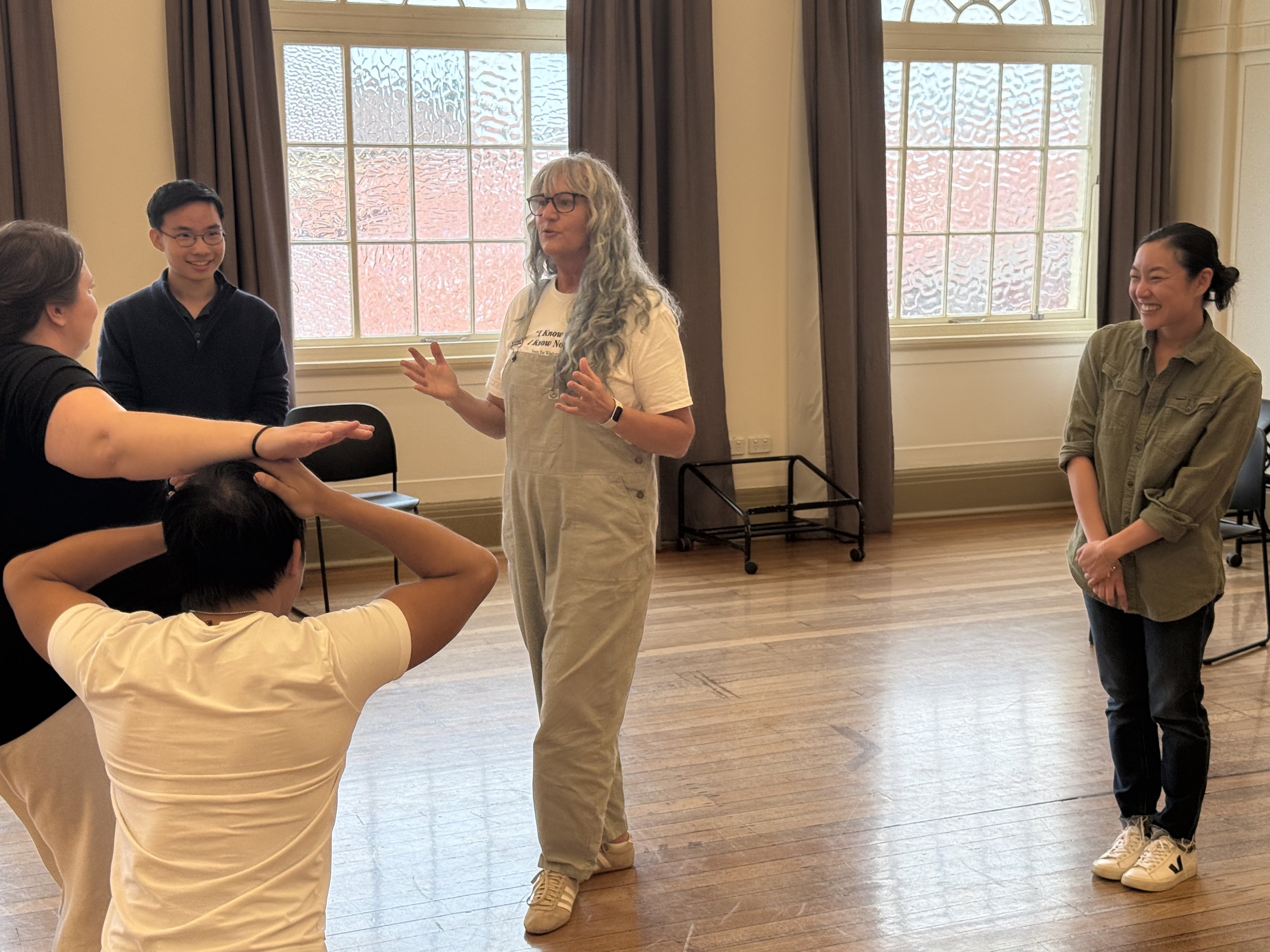
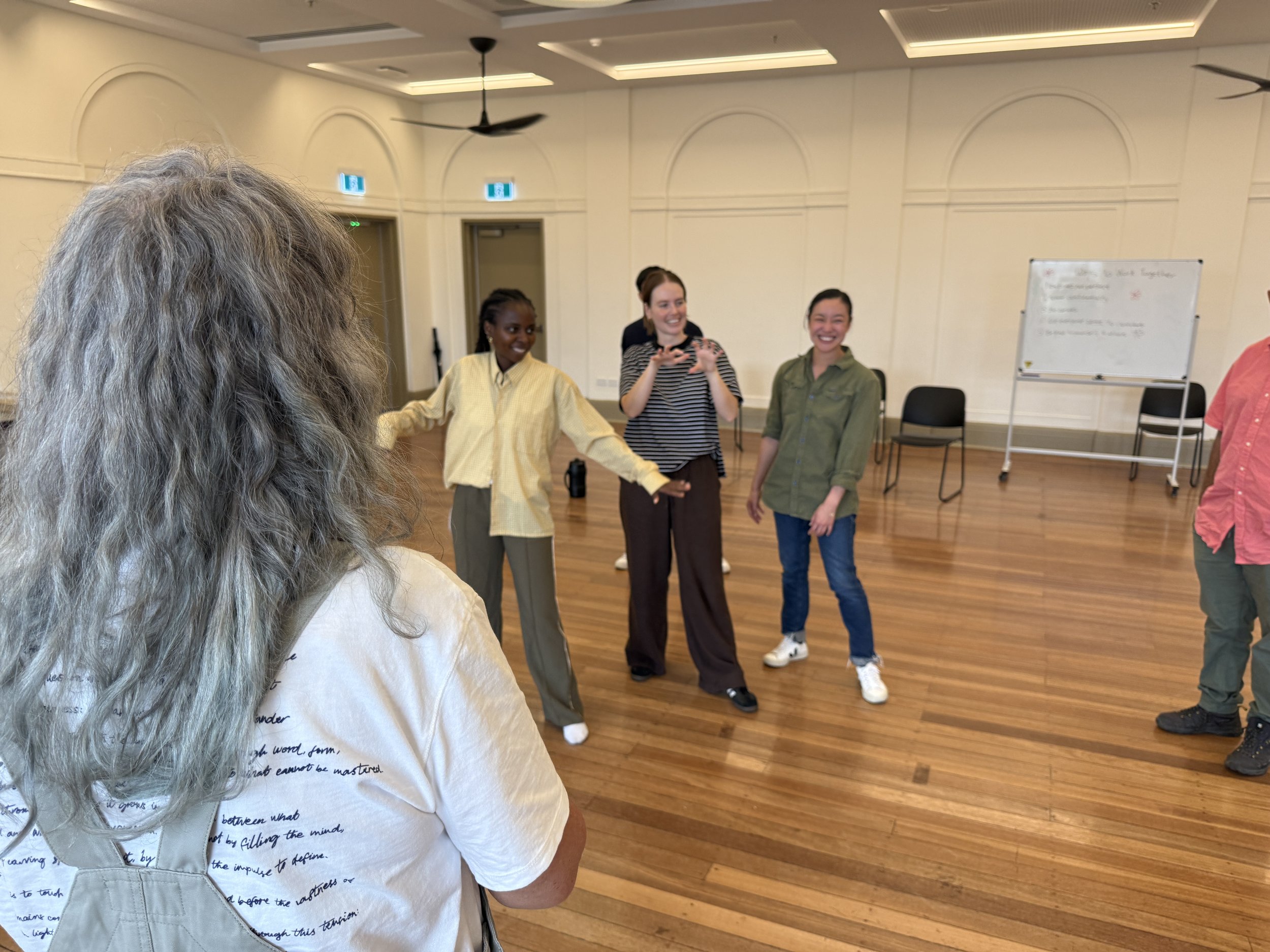
They brought me in to run a half-day workshop. They knew they needed someone who had a different approach but still had academic rigour, warmth, and could bring some fun. My approach looks unusual from the outside, but it’s based on contemporary cognitive science. We aren’t machines. We learn through experience, practice, play and reflection.
My goal was to build a psychologically safe environment in which we could explore the fear of getting it wrong, speaking up, and working as equals. If we wanted a different culture in the hospital, we needed a different culture in the training room first.
One participant exemplified this arc. She initially said she was “really frightened,” and “hated this kind of thing.” However, fear was what we were there to explore, and so she took the risk of volunteering for an exercise. By the end of the workshop, she was laughing and her colleagues “saw a side of her they had never seen before.” The price of entry for culture change is a willingness to confront our fears.
An unboring approach
“The workshop was very profound for me because getting engagement is normally so hard. I'm so used to sitting in the room and having to work really hard to get people chatting and talking. However, you engineered that so quickly in the room. You got them laughing and that had a huge impact on the rest of the [Human Factors] sessions.”
One participant exemplified this arc. She initially said she was “really frightened,” and “hated this kind of thing.” However, fear was what we were there to explore, and so she took the risk of volunteering for an exercise. By the end of the workshop, she was laughing and her colleagues “saw a side of her they had never seen before.” The price of entry for culture change is a willingness to confront our fears.
Stronger connections, better retention
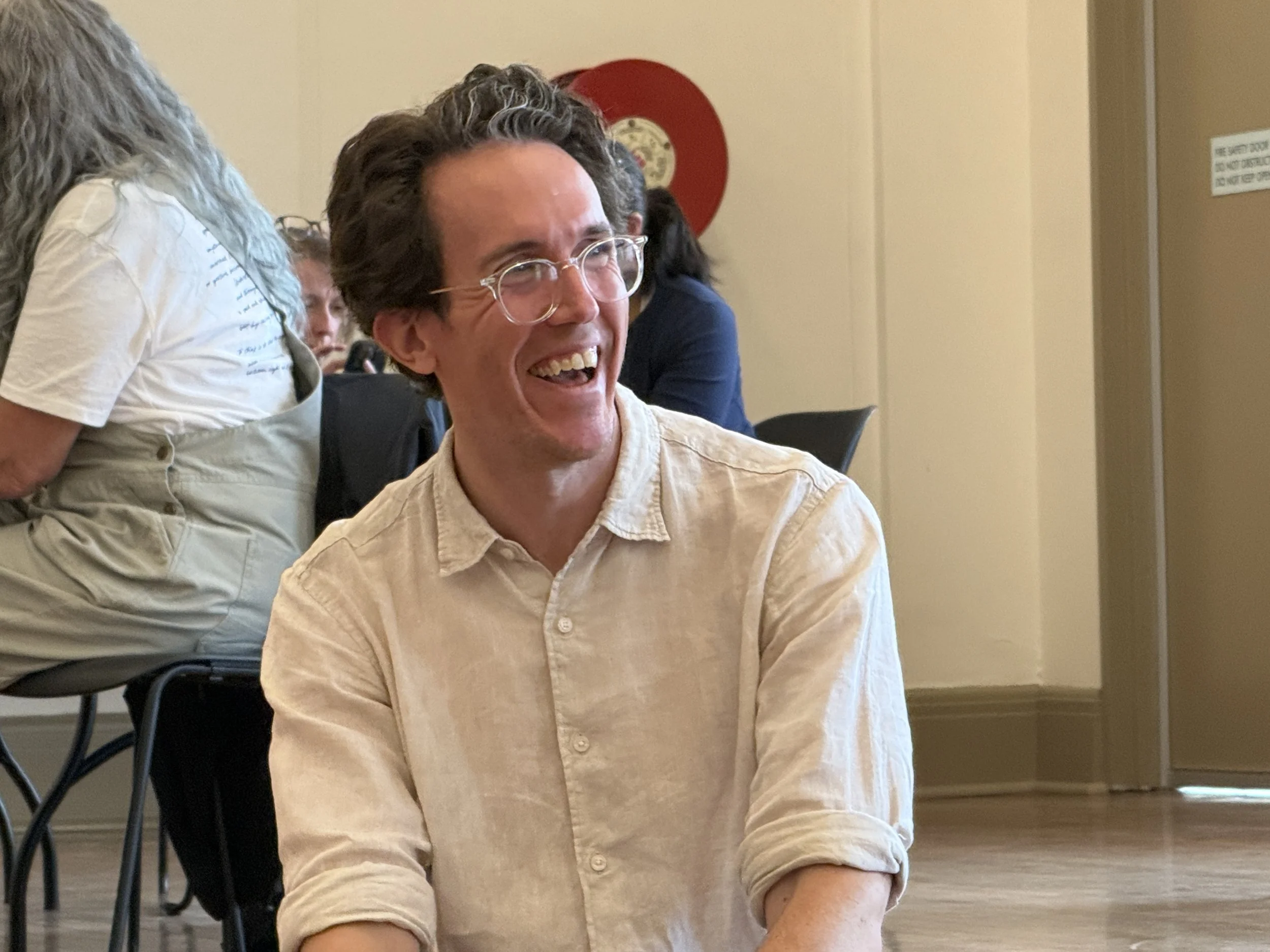
The experience had significant impacts on the cohort as a whole. Where the first cohort retained few or no ambassadors, this second cohort “took off” with significantly better retention despite increased clinical pressures. Active, ongoing ambassador communities continue at both the Peel and Rockingham campuses.
The key difference was the shift from didactic teaching to facilitation that actively worked with connection, psychological safety, discomfort and fear. Didactic teaching was moved online, and in-person events were used for practical, experiential learning.
This isn’t a shift that can come from a half-day workshop. It comes from a different design approach and a willingness to take a risk.
A New Perspective on Culture
The biggest impact of the workshop has been on Paulette and how she thinks about culture change, leadership, and organisational development:
“The workshop made me want to understand the science behind it, the theory. Why is this so effective? I’ve been in the didactic role, and I just don’t see the same behaviour shifts I saw with our experiential work. So now I want to get more confident in this approach. I’m on a mission.”
The experience led Paulette to join me in Sydney for a four-day facilitation intensive around experiential, play-based approaches to behaviour change. She’s thinking bigger now. We only delivered one workshop with one team. However, Paulette recognised that the culture we experienced in the room is the culture we need throughout healthcare. It’s the kind of culture we see in modern, leading-edge organisations like Buurtzorg in The Netherlands.
“Everybody wants to see changes in healthcare. Everyone has positive intent. However, something stops people from making change. But I’ve seen it now, that it can be done, and I experienced it in our workshop. So, I believe this change is possible. It will take a long time. You and I are only a year in.”
Ready to unboring training and unlock your team?
Training for Teams
If you want a different outcome, you have to be prepared to do things differently. Unboring your team development and discover the collective intelligence that already exists in your team.
